FONPLATA Participates in Dialogue on Water Resilience Organized by CAF at COP30
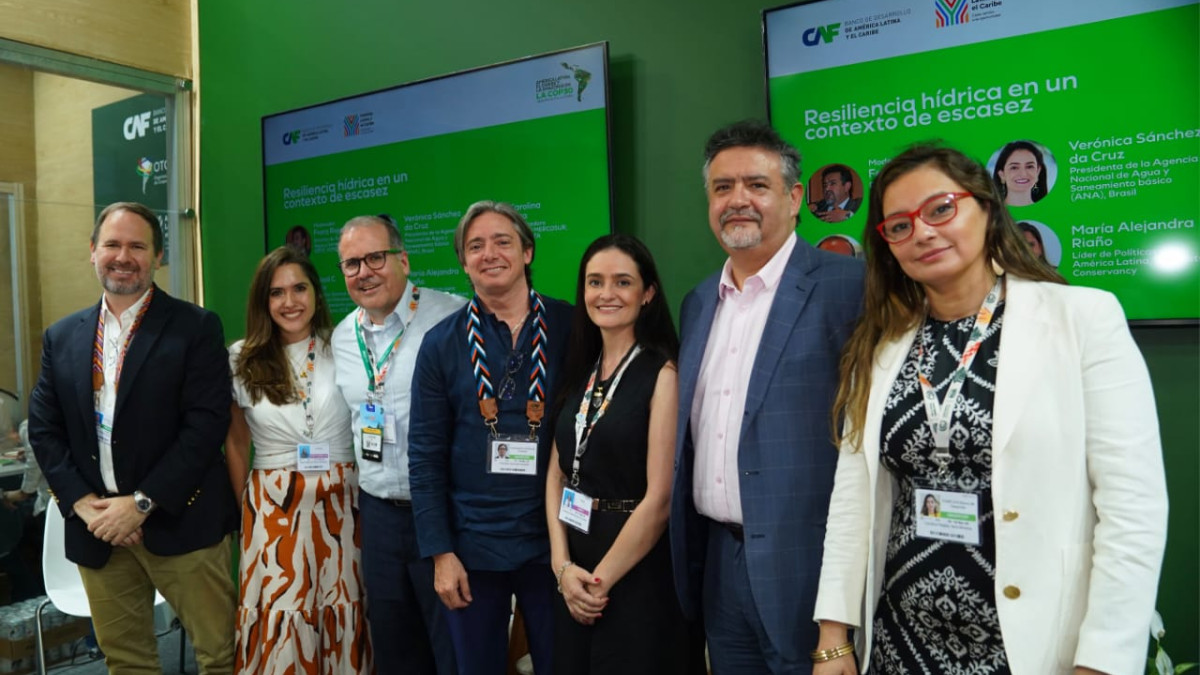
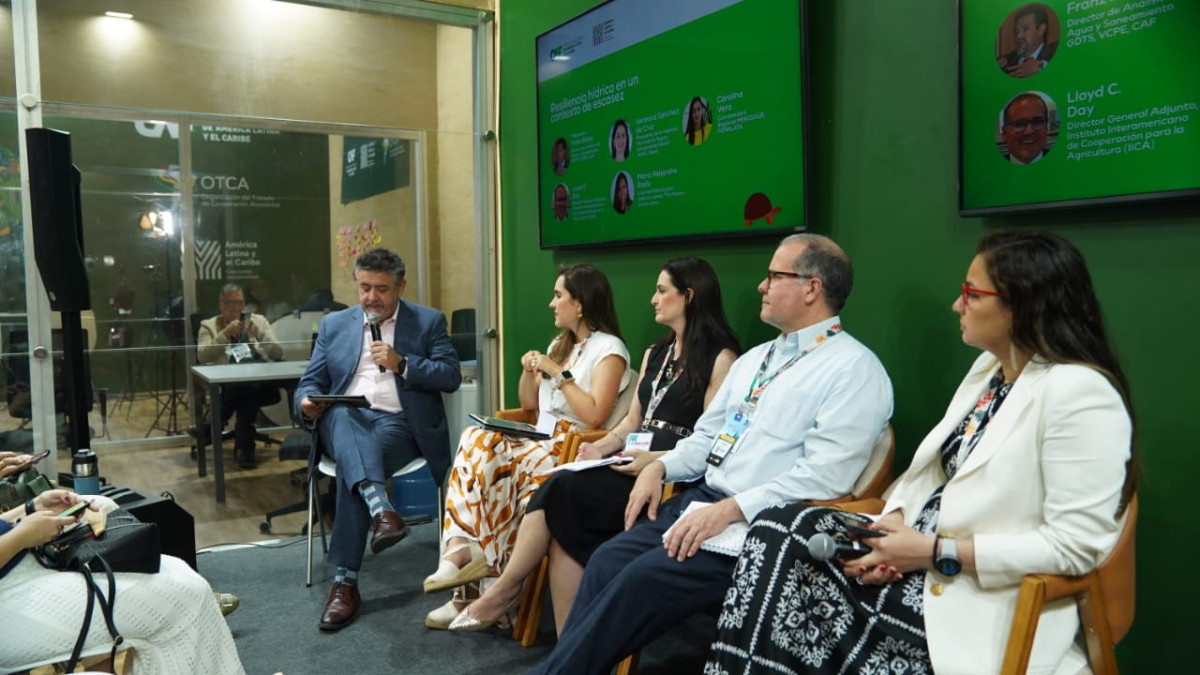
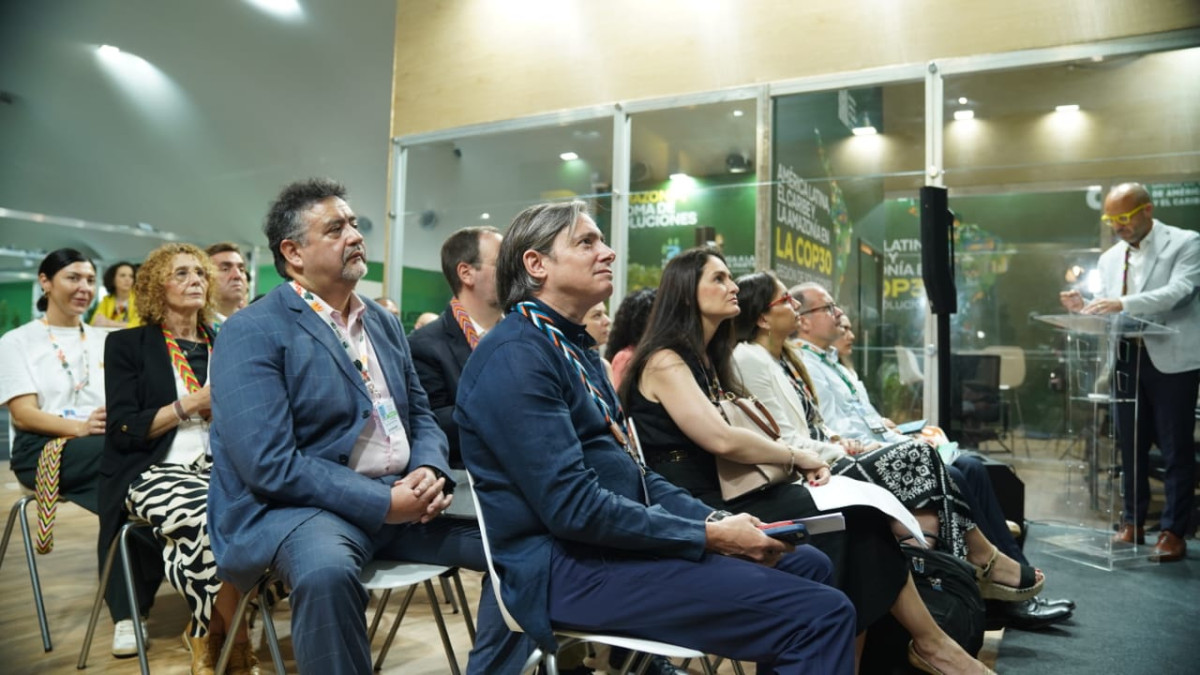
In continuation to the Bank's agenda at COP30, on November 17, representatives of FONPLATA took part in the meeting: Water Resilience in a Context of Scarcity, a strategic dialogue organized by CAF to showcase initiatives and advances in climate change adaptation, mitigation, and resilience.
The meeting brought together regional leaders to discuss the challenges faced by Latin America and the Caribbean in relation to water security, in a scenario marked by the increasing frequency and intensity of droughts. Data showed that the region holds 30% of the planet's freshwater resources, yet 35% of its population lives under water stress, and one in four people lacks safe access to drinking water. Between 2005 and 2024, economic losses due to droughts reached USD 35 billion— the last five years accounted for 57% of this amount evidencing the worsening of the phenomenon.
The panel, moderated by Franz Rojas, CAF’s Director of Water and Sanitation Analysis, was attended by Carolina Vera, FONPLATA's General Coordinator for COP30 and MERCOSUR Regional Coordinator; Verónica Sánchez da Cruz, President of Brazil's National Water and Basic Sanitation Agency (ANA); Lloyd Day, Deputy Director General of the Ibero-American Institute for Cooperation on Agriculture; and María Alejandra Riaño, Policy Leader for Latin America at The Nature Conservancy. The speakers agreed on the need to transform water governance by incorporating integrated approaches, long-term planning, and innovative solutions such as wastewater reuse, desalination, and rainwater harvesting.
FONPLATA presented the Indaiatuba Integrated Sanitation and Water Resources Program, a case study in climate resilience that demonstrates how to address the risk of shortages and droughts through multiple, complementary solutions. The project integrates diversification of sources, expansion of storage, industrial reuse of treated water, and modernization of supply infrastructure. Structural adaptation measures include stabilization of the banks of the Jundiaí River, erosion control, and restoration of native riparian vegetation, reducing flow peaks, and improving water quality. This intervention illustrates how efficiency, reuse, and ecological restoration can consolidate a robust and resilient water system, aligned with the principles of climate adaptation and territorial water security.
The event concluded with a call to action to advance proactive and resilient strategies that will enable the region to confront the impacts of climate change and ensure water security in Latin America and the Caribbean.
11/18/2025
SDG-6 Clean Water and Sanitation